
Good infrastructure is the primary reason behind the increased growth in real estate. Property prices don’t rise just because builders decide so. The primary reason behind this is that real estate value is closely tied to infrastructure development, such as roads, metro lines, airports, IT corridors, and public utilities, which make locations more liveable and profitable.
The value of real estate increases with good infrastructure only, because every builder can build flats and buildings, but not every place has good infrastructure to maintain an easy and comfortable lifestyle. Every major real estate boom has a clear pattern: infrastructure arrives first, demand follows, and prices rise later.
This is exactly why investors track upcoming infrastructure projects more closely than current property rates. These infrastructure projects reduce travel time, improve accessibility, and attract businesses. Once jobs and connectivity improve, people move in. When people move in, real estate demand increases, which means simple economics, no hype.
Reputed developers don’t gamble on locations; they follow long-term infrastructure plans because that’s where sustainable appreciation happens. Today’s buyers are not just looking for big buildings or good interiors; they check out future infrastructure potential and proximity to metro stations, highways, and employment hubs before making a purchase decision.
Infrastructure is the backbone of our society, comprising assets that provide services essential to our lives. The scope of infrastructure is undergoing a profound transformation, as the ways we live, move, and communicate evolve. The modern infrastructure landscape can be classified across four key segments: energy and utilities, transport and logistics, digital assets, and circular economy and other services.
Transport infrastructure as a key growth driver

Transport infrastructure and planning are key enablers of trade and drivers of economic growth. These networks represent invaluable assets, not merely in terms of monetary worth but in the significant socio-economic benefits they bring. The ability to move people, goods, and services smoothly lies at the heart of modern life, connecting participants within the economy and progress.
Together, these form one of the country’s most valuable national assets. And yet, given the current state of prioritisation of infrastructure projects, it must be said that we need a long-term transport infrastructure vision that encapsulates how people will live and work.
Maintenance of existing infrastructure, and planning and development of new, future ready infrastructure is fundamental to economic activity, and therefore to economic growth. The safe and reliable movement of goods, services, and people is essential to prevent stagnation.
Transport networks are vital in unlocking opportunities at both micro and macroeconomic levels, playing an instrumental role across mainstream and secondary economies.
Increase in demand for new residential developments
New build developments are becoming increasingly popular with developers and buyers across the country. With their attractive layouts and help to buy schemes attached to them, new builds are supporting people in purchasing affordable, brand new homes, with a smaller deposit if they are a first-time buyer.
However, regardless of the popularity with potential buyers, what are the other reasons that developers want to invest in new builds?
In many ways, new build developments are more cost efficient compared to full-scale refurbishments or permitted development (PD) conversions. The reasons behind this are that with a new build, developers have the ability to shape up the design and maximise the layout of residential units in order to maximise the return on the overall project.
Furthermore, with full-scale refurbishments, the physical state of the building will be unknown until work on the site actually commences. When this happens, they may identify issues that would require additional work and money to be invested, to ensure that the building is safe and viable.
As the market is moving towards mixed-use developments, new builds allow businesses to incorporate more variances to the project and this is unlikely to happen with refurbishments or PD conversions.
Role of government and urban planning
The role of government in urban development and urban planning areas has been observed as development through the heritage of human settlement. The concentration of industry and commercial activities, together with public facilities in urban areas, produces planned development. It produces public and private transport systems and a continuous spate of people from rural areas.
The ultimate objective of urban planners is to improve the quality of life for everyone through the management and physical development via public policies and programmes, as well as public or private sector collaboration, coordination, and control.
Likewise, by improving the quality of life for everyone, particularly those in the country, urban planners attempt to help the economy grow and deal effectively and efficiently with its dynamic changes, including restructuring and retooling their institutions and infrastructure.
Their problems involve finance and expenses, taxation, regulation, and much more of the government services for health and safety.
For this purpose, all activities in this area are grouped into six different categories, and their roles are defined explicitly. They include formulating long-range and short-range goals of societal projects, planning the development and control of the physical use of land, providing services such as transport, education, communication, security, commerce, financing, science, health, arts, environment, and recreation, generating revenue through taxing people, firms, and earned income, and providing regulation for urban markets.
It delineates the responsibilities between the urban federal governments, state governments, and local governments in negotiated areas.
Different dimensions of social justice for effective policies of mixed institutions are specified according to their suitability. New directions suited for the role of government in urban areas are pointed out.
Impact on property investment opportunities
Further to the fact that new builds are more cost-effective, developers are also able to shape the project from the incept and maximise layout to increase the overall value of the scheme. New builds can be designed to incorporate both retail plots and commercial units into the project, which will attract more interest as well as increase the return on investment.
Most new development sites will have units of social housing included on the site.
Social housing can affect how desirable the development is to potential customers. However, even if there were social housing plots built onto a great site that has been built on prime high-end residential areas, this would rarely affect how in-demand the site is to potential buyers. The desirability of a site depends on the area and social space elements, amongst other things.
Lifestyle and community benefits
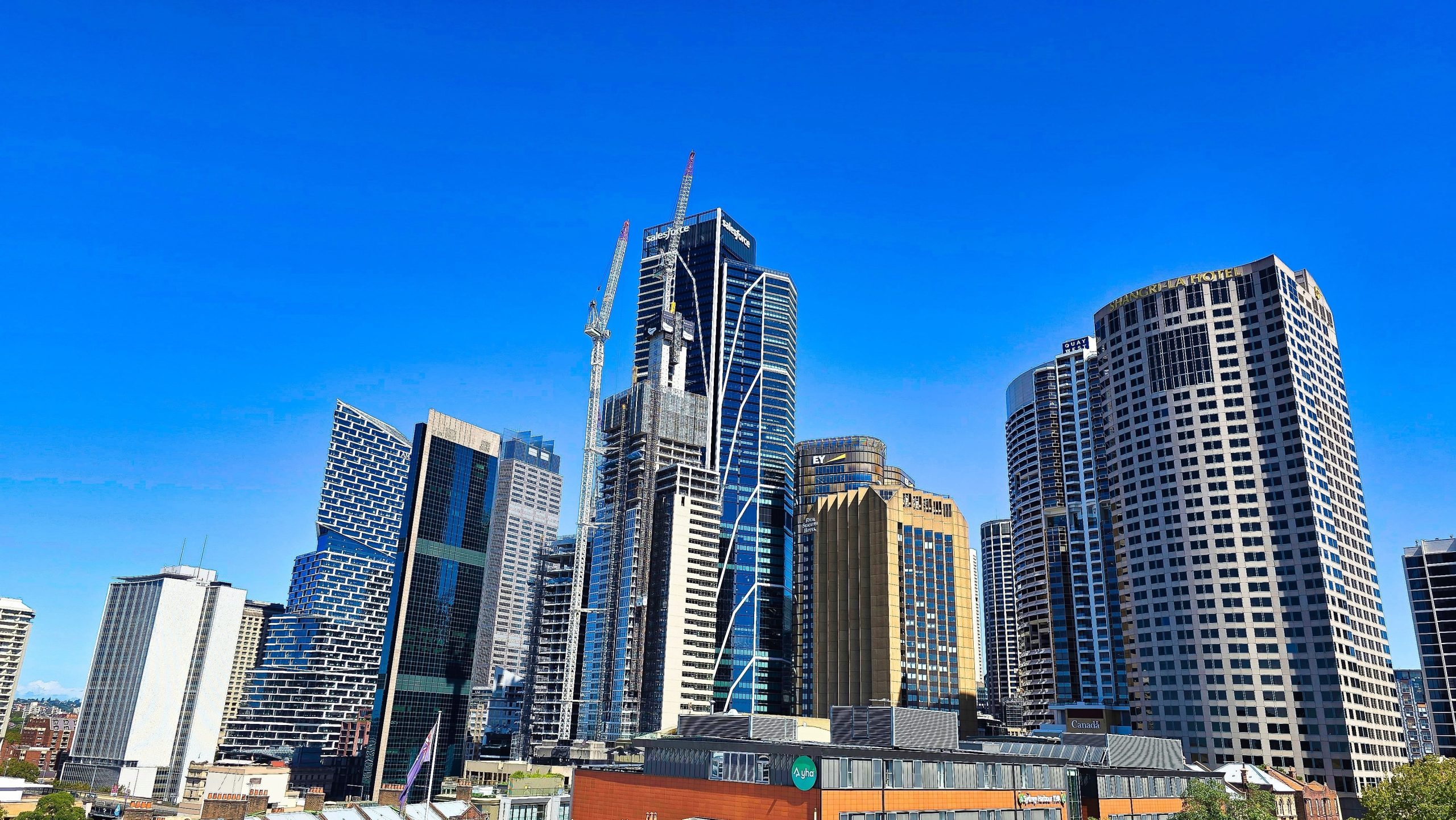
Infrastructure projects do more than improve transport and connectivity; they help shape the way communities live, interact, and grow. In Sydney, new residential developments are increasingly being designed around lifestyle convenience, accessibility, and long-term liveability, particularly in areas benefiting from major public and private investment.
Improved roads, public transport links, schools, healthcare facilities, parks, and retail precincts are transforming emerging suburbs into well-connected lifestyle destinations. For residents, this means shorter commute times, easier access to essential services, and stronger connections to surrounding business and entertainment hubs.
Developers are also responding to changing buyer expectations by creating communities that support modern lifestyles. Walkability, green spaces, cycling paths, fitness facilities, cafés, childcare centres, and community-focused amenities are becoming key selling points in new residential projects across Sydney.
These infrastructure-led communities are especially appealing to young professionals, growing families, and downsizers seeking a balance between urban convenience and suburban comfort. As a result, areas once considered purely outer-growth corridors are evolving into vibrant residential hubs with strong long-term appeal.
Beyond property value growth, infrastructure investment contributes to a greater sense of community, improved quality of life, and stronger economic activity within local neighbourhoods; all of which continue to drive demand for new residential developments across Sydney.
The investments-economic growth nexus has received a growing attention in the last decades, given the fact that these variables are strictly intertwined. Infrastructure investments are a crucial driver of performance in the transport sector. Infrastructure development is effectively able to promote economic growth.
Indeed, transport infrastructure is a key element in economic development regardless of income levels. It promotes individual well-being and economic growth, facilitating the generation of reciprocal economic, social, and cultural relations. Failure to address transport problems lessen the economic growth process.
Infrastructure facilitates trade, powers businesses, joins workers to their jobs, generates new possibilities for areas that are encountering difficulties, and guards a country from a progressively erratic natural environment. It also sustains workers, providing millions of jobs each year in building and maintenance.
Ultimately, the goal is not just to secure a property, but to choose a location and home that will grow with you whether that means supporting your lifestyle, your family, or your financial future. With the right research and a clear understanding of what to look for, buyers can navigate new developments with confidence and make decisions that stand the test of time. Contact us now.