
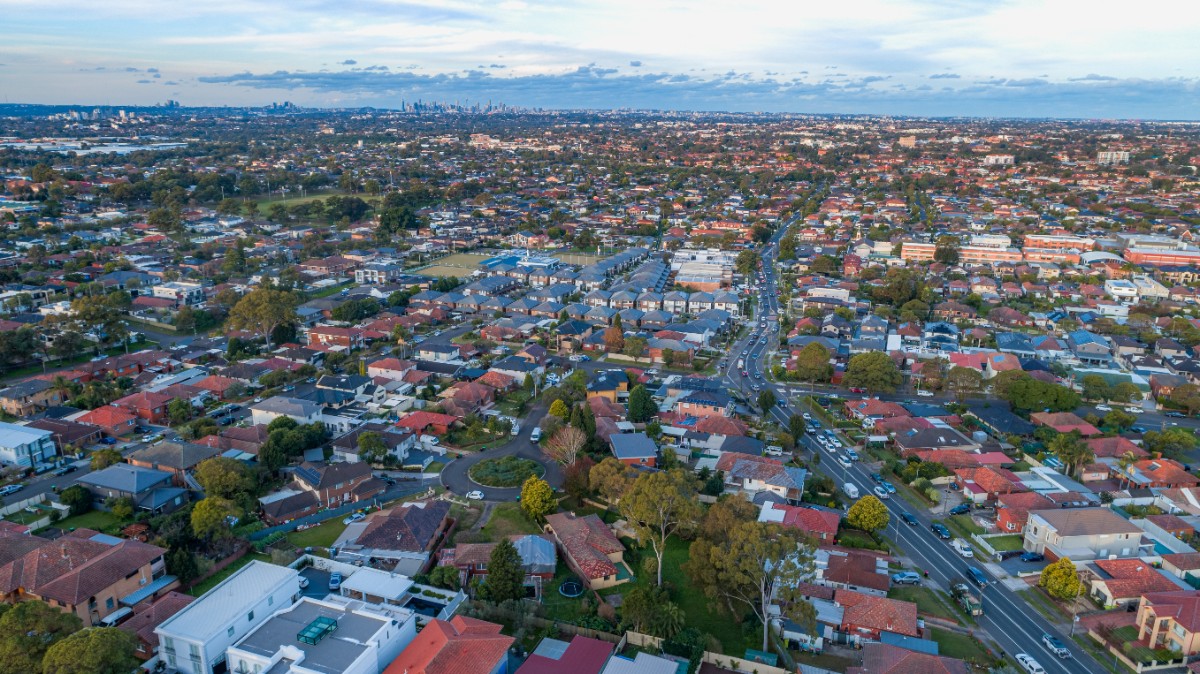
Sydney’s residential landscape is changing rapidly, with new housing, transport links and major infrastructure projects reshaping suburbs across the city. From established areas undergoing urban renewal to emerging communities accommodating strong population growth, development is creating new opportunities for buyers, investors and property developers.
Sydney’s expanding population and ongoing demand for housing are accelerating residential development across both established and emerging suburbs.
Supported by major transport links, employment hubs and community infrastructure, these areas are evolving into increasingly connected and liveable neighbourhoods with strong appeal for buyers, developers and property investors.
8 Sydney suburbs that are experiencing the most new residential development, according to the Australian Bureau of Statistics
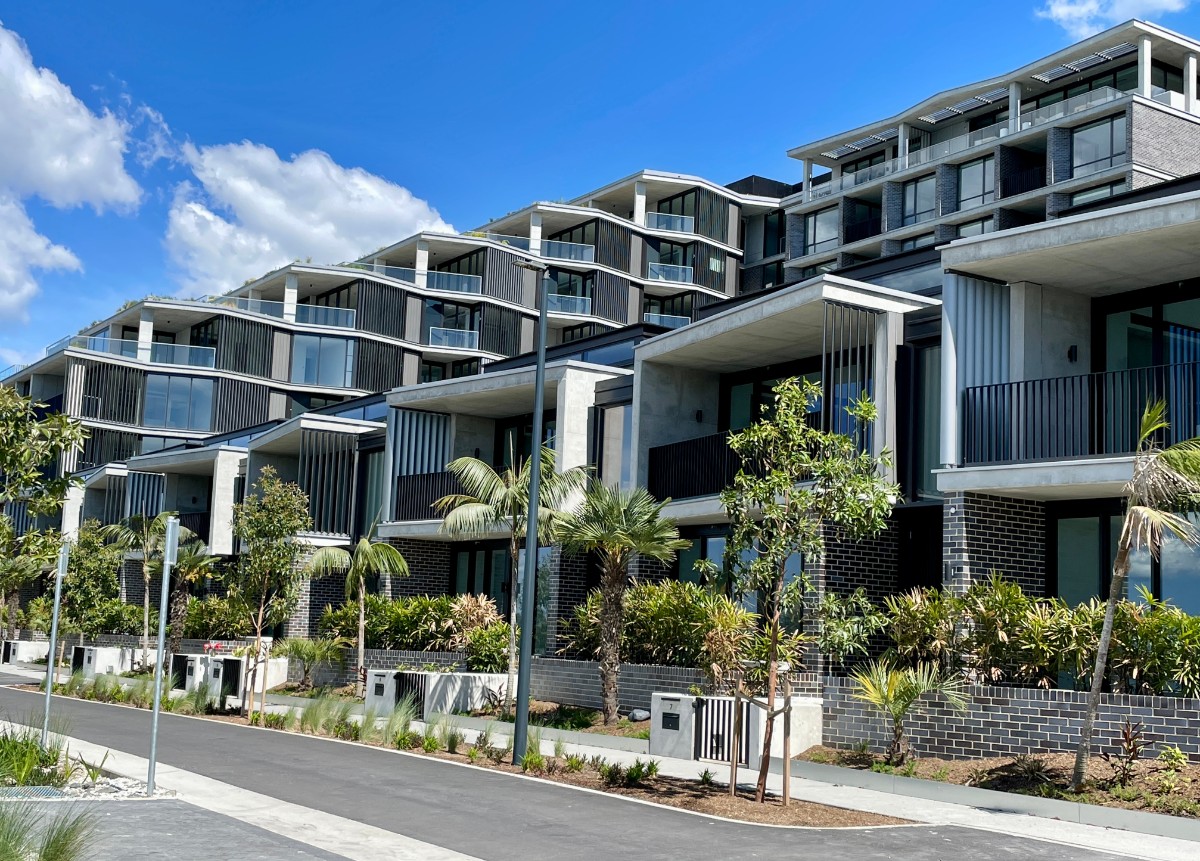
Wiley Park
- Growth Stats: $1.326 million median, up from $1.013 million
- Population Growth: 18.7% annual increase
- Key Driver: Canterbury-Bankstown urban regeneration corridor
- Growth Timeline: Rapid acceleration since 2023
Fairfield
- Growth Stats: $1.17 million median with highest combined growth score
- Population Growth: South West Sydney migration hub
- Key Driver: Transport upgrades and employment opportunities
- Growth Timeline: Sustained growth leadership for three years
Marsden Park
- Growth Stats: 31,864 residents, up 5,275 in one year
- Property Growth: 8.1% median price increase
- Key Driver: Largest new development area in Sydney
- Growth Timeline: Population doubling every 4-5 years
Leppington
- Growth Stats: 32,151 residents, up 5,280 in one year
- Property Growth: 7.8% annual increase
- Key Driver: New rail line and housing developments
- Growth Timeline: Fastest raw population increase in NSW
St Marys
- Growth Stats: $987,000 median with strong combined metrics
- Population Growth: Western Sydney Airport employment hub
- Key Driver: Airport opening 2026 plus job creation
- Growth Timeline: Pre-airport boom already underway
Bonnyrigg Heights
- Growth Stats: $1.156 million median, up $214,877 in one year
- Population Growth: 9.8% annual increase
- Key Driver: School upgrades and community facilities
- Growth Timeline: Steady acceleration over 18 months
Rouse Hill
- Growth Stats: 31,681 residents, up 3,878 in one year
- Property Growth: 6.2% annual increase
- Key Driver: Direct train connection to Sydney CBD
- Growth Timeline: Metro completion triggered growth boom
Liverpool
- Growth Stats: $1.1 million median with strong population inflow
- Population Growth: Southwest corridor leadership
- Key Driver: Business district expansion plus airport proximity
- Growth Timeline: Five-year sustained growth trajectory
What types of residential developments are planned?
If you’re considering new residential property development as a way to build your bank balance, start by knowing what types of projects you can undertake. Renovations designed to update an existing building is a popular trend, be it your own home or another. Renovations are seen as a nice and easy project introduction to property development, just be sure to do your research on the area and not over capitalise.
- House behind house: if you like the idea of using the equity in your own backyard, a house behind house is a great starting point for property development. Reducing your backyard can also reduce your weekend workload with a more manageable garden.
- Duplex: a subdivision that allows for two homes to be built on the one master titled piece of land. The two self-contained dwellings must share a wall. Building a duplex is a profitable investment strategy, with options that can be mixed and matched to your investment goals.
- Triplex: same as a duplex except that it allows you to build three homes on the one master titled piece of land. Triplex subdivision designs include townhouses, villas and single storey homes. If you’re lucky enough to have a corner piece of land with two street frontages, a triplex is an option that’s well worth considering.
- Multi-unit site: four or more units or townhouses on a single block. If done correctly, they can be highly profitable investment projects. The process can come with higher risk than other projects, but this in turn can create higher reward.
Major infrastructure projects supporting Sydney’s growth suburbs
- South West Sydney: one of the fastest-converting rural-to-residential corridors in the country, with nearly 16,000 residents. Research by Royal Life Saving Society Australia found that by 2028, more than 20,000 people across western Sydney’s growth suburbs will live outside a ten-minute drive of a public pool. When a suburb is captured multiple times a year, the gap between scheduled works and delivered infrastructure becomes measurable, not from a report, but from the ground itself.
- Western Sydney Aerotropolis: what was farmland and rural lots a decade ago is now a construction zone of national significance, with residential and commercial development following rapidly in the airport’s wake. Schools, health services, parks, and transport connections that define a functioning community are on a different timeline: one set by funding cycles and approval mechanisms that were not designed for growth at this pace or scale.
- Gables, The Hills District: ten years of aerial imagery shows a paddock becoming a suburb, and the infrastructure question embedded in that transformation is visible in the same data. When a corridor is captured multiple times a year, planners can see how quickly rural land is converting, where impervious surface is expanding, and where the gap between housing delivery and supporting infrastructure is already opening.
How new developments are changing Sydney’s growth suburbs
- Transport: new rail, roads and bus links cut travel times and widen the catchment for jobs and services.
- Jobs: employment precincts bring workers who want to live nearby, supporting local demand.
- Amenity: schools, health, town centres, parks and retail lift liveability.
- Utilities and capacity: water, sewer, power and telecommunications unlock land for housing.
Major infrastructure rolls out over years, and benefits arrive in stages. A realistic buyer looks at delivery timelines, not just announcements and understands that suburbs mature gradually as projects complete.
As access, jobs and amenity improve, an area can become more liveable and more sought‑after over time. Price predictions should not be made but the drivers of demand are observable and verifiable, which is what buyers should focus on.
What are the expected prices of new properties in Sydney’s growth areas?
Three distinct pockets are defying the broader slowdown.
The Eastern Suburbs belt continues attracting owner-occupiers with lifestyle appeal and limited stock.
The Lower North Shore holds because of school zones and train access.
The Northern Beaches saw a pandemic surge that was never fully corrected.
But, according to the Australian Bureau of Statistics, the real surprise in 2026 is the outer-west comeback. Blue Mountains median prices hit $1.05M with +13.0% annual growth. Merrylands-Guildford is up +12.5% to $1.33M. Campbelltown jumped +12.3% to $1.03M. These aren’t speculative bubbles. They’re affordability-driven demand from buyers priced out of the inner ring who still need reasonable commute access.
Which Sydney growth suburbs offer the best investment potential?
Smart investors who understand market mechanics are quietly locking in double-digit growth in places most people overlook. The best suburbs to invest in Sydney are not always the ones with the loudest headlines. In 2026, they’re the pockets where genuine demand drivers are pushing values up consistently.
Expect to pay anywhere from $680,000 for a solid entry in growth corridors through to $1.2 million in established zones with infrastructure momentum. The key is matching your budget to a suburb’s actual investment fundamentals, not just its marketing story.
- Rental yield alone is a trap: growth suburbs need both yield and capital appreciation drivers working together.
- Infrastructure projects take between 5 to 8 years to move prices: buying after the announcement is often too late or perfectly timed depending on stage.
- Western Sydney Airport precinct is overhyped in some pockets, underpriced in others: the difference is zoning and completion dates.
What should buyers consider before purchasing in an upcoming development?
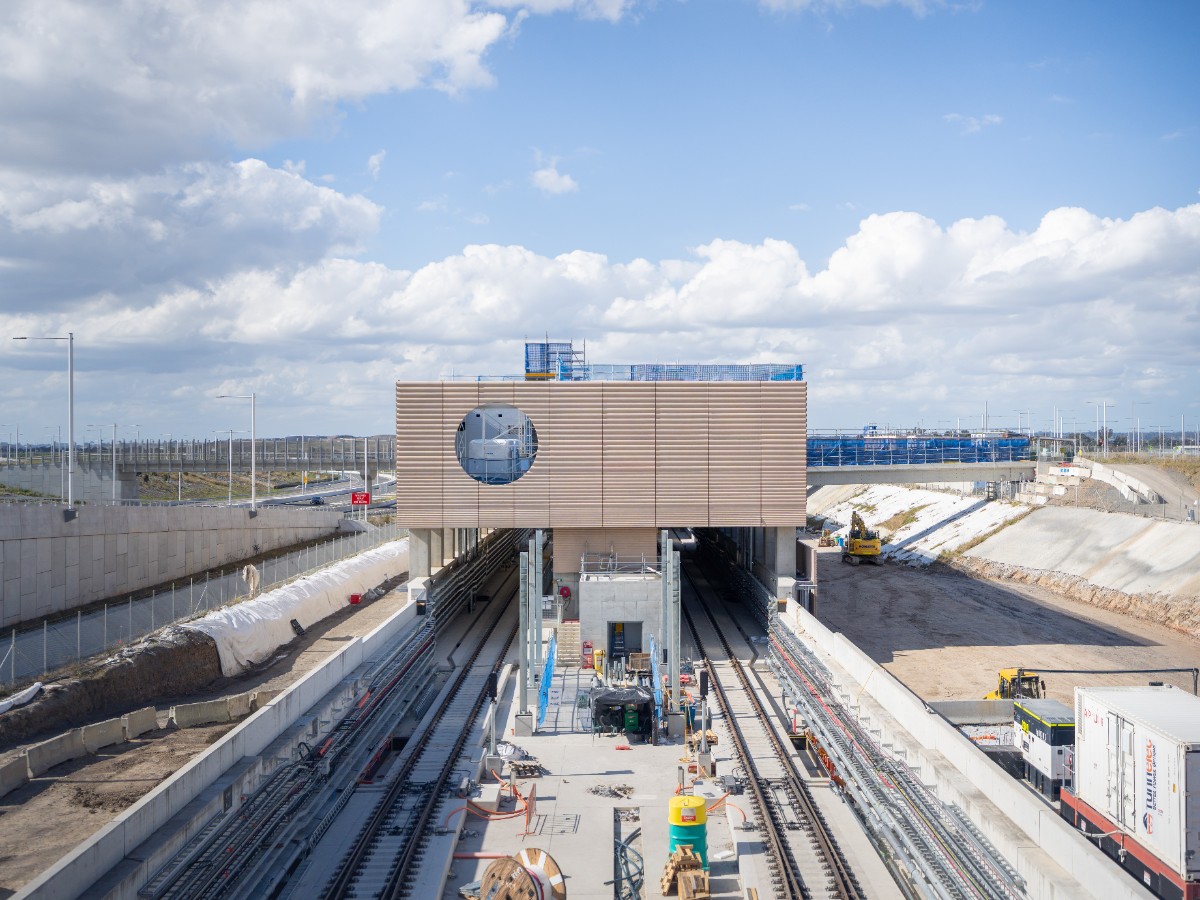
On most days, people keep a close eye on construction happening around the city. In particular, which projects are clearly progressing, but also which ones seem to not be moving at all, with only the “project coming soon” sign slowly fading with each passing day.
In the market today, just because a developer is marketing a property, or adds a nice sign in front of the property, or even has a building permit, it does not necessarily mean construction is to start any time soon.
This emphasises the importance of vetting a developer. Doing so is actually not overly complicated. It just requires asking the right questions and doing a little legwork.
First and foremost, ask directly which sites they’re currently building. A developer who is actively building will have no hesitation answering this question. They’ll tell you exactly where their active construction sites are and encourage you to check them out. If the answer is vague, or if all their sites appear to have signs but no cranes, that’s a red flag worth taking seriously.
Find out from the developer locations of buildings they’ve recently finished. Pay it a visit. Walk around the building. Look at the quality of the finishes and the common areas. And if possible, speak to people who bought into those projects. Ask them how the process went.
The question isn’t whether there were delays. The question is by how much, and how the developer communicated and handled them. Also, check how many projects they’re running simultaneously. Ask how many active projects they currently have and where each one stands in the construction timeline.
What you’re trying to understand is whether the company’s current pipeline is consistent with the scale, resources and track record of its operation. And most importantly, construction is progressing.
But an even more important question in experience: after a building permit has been obtained, when does the developer actually have to start building? Intuitively, it should be as soon as possible, but in the market today, the answer to that question is not so obvious. If commencement timing is a concern, ask your lawyer to examine whether the agreement provides a meaningful construction-commencement timeline and what rights you have if that timeline isn’t met.
Sydney’s fastest-developing suburbs show clear infrastructure-driven growth patterns. Western Sydney leads with airport and transport projects driving demand. The state of Sydney report highlights continued outperformance in rising Sydney corridors.
Population growth reaches up to 22% annually, reflecting Sydney’s westward expansion. With 107,538 new residents yearly and $120 billion in infrastructure investment, price growth is expected through 2025-2027 in heartland Sydney areas. New housing and government funding support this trend. The Western Sydney Airport opening in 2026 will boost affluent Sydney suburbs’ expansion.
With thorough research, a clear investment strategy and professional property management, investors can make informed decisions and build a portfolio that performs well over time. Contact us now.